

NIZHNY NOVGOROD OBLAST
Nizhny Novgorod Oblast is located in central European Russia along the Volga River basin, approximately 400 km east of Moscow. It is a region defined by mixed agriculture, developed infrastructure, and strong logistical positioning within the Russian interior.
For farming families evaluating lawful integration into Russian regional frameworks, Nizhny Novgorod represents market proximity, diversified production systems, and structured agricultural stability within an established regional economy.
A Diversified Agricultural Region Along the Volga Corridor
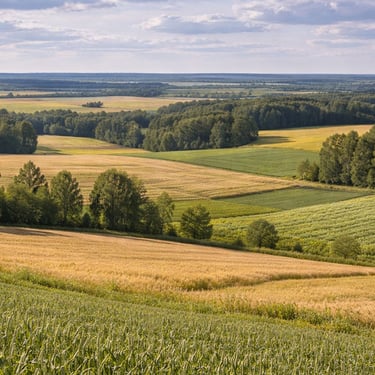
Unlike southern steppe regions, Nizhny Novgorod combines forest-steppe agriculture, river-based logistics, and established rural settlements. It is not frontier farmland. It is integrated, system-based agriculture.

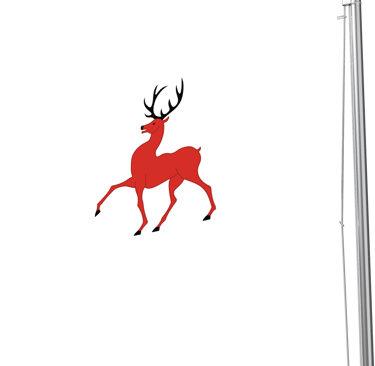
WHY NIZHNY NOVGOROD
1. Strategic Location Near Moscow Markets
The region benefits from proximity to Moscow and central Russian consumption hubs. This supports reduced transport distance for grain, dairy, and processed agricultural goods.
2. Higher Rainfall and Moisture Stability
Average annual precipitation ranges between approximately 500 and 650 mm, generally higher than southern steppe regions. Rainfall distribution is more consistent, reducing drought volatility.
3. Diversified Agricultural Base
The oblast supports grain, oilseed, fodder, and dairy production. This enables mixed crop-livestock integration rather than pure grain monoculture.
4. Established Infrastructure and Processing
The region has developed road, rail, and agro-processing capacity. It is not isolated rural expansion. It operates within existing agricultural supply chains.
NIZHNY NOVGOROD MAP
GEOGRAPHIC POSITIONING
Nizhny Novgorod Oblast occupies a central position in European Russia along the Volga River corridor, approximately 400 km east of Moscow.
It is inland, non-border exposed, and positioned within one of Russia’s primary economic and transport corridors.
Strategic characteristics include:
Direct access to the Volga River logistics system
Established rail and highway connectivity to Moscow and central Russia
Integration into national processing and distribution networks
Proximity to major consumption markets
Unlike remote frontier regions, Nizhny Novgorod operates within an existing economic framework. Agricultural production here benefits from:
Shorter transport chains
Access to processing infrastructure
Established rural municipalities
Higher population density relative to steppe regions
This region is not geographically isolated.
It is economically connected.
For farming families prioritising:
Market access
Infrastructure reliability
Reduced logistical uncertainty
Central Russian positioning
Nizhny Novgorod offers structural geographic stability.
SETTLEMENT SUITABILITY
Nizhny Novgorod Oblast is suited to farming households seeking structured agricultural integration within an established regional economy rather than frontier expansion.
This region is particularly appropriate for:
Mixed crop and livestock operators
Dairy-focused farming families
Households comfortable with higher population density
Operators prioritising logistics access and market proximity
Families seeking integration into existing rural municipalities
It is less suited to:
Large-scale frontier-style grain expansion models
Households expecting isolated steppe-style land blocks
Operators seeking extremely low-density settlement environments
Land in this region is more integrated into existing rural systems. Settlement typically occurs within functioning agricultural districts rather than newly opened development corridors.
Infrastructure, services, and supply chains are more mature than in remote steppe regions. This may reduce certain integration uncertainties, but it also requires adaptation to established municipal structures and local agricultural norms.
For families prioritising:
Market connectivity
Processing access
Rural stability within reach of Moscow
Diversified production systems
Nizhny Novgorod presents a structured and economically connected settlement environment.
COMMUNITY AND CULTURAL ENVIRONMENT
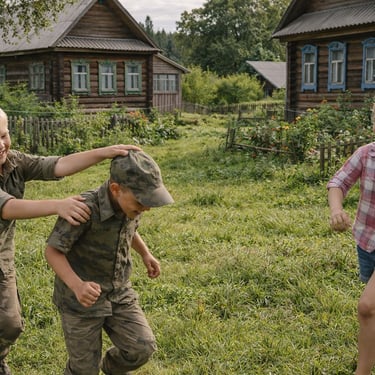
Nizhny Novgorod Oblast combines rural agricultural districts with established towns and mid-sized urban centres. It is not a sparsely populated frontier region, but neither is it metropolitan Moscow.
Rural communities in the oblast are traditionally structured around:
Agricultural production
Local municipal administration
School and family-centred life
Orthodox Christian cultural heritage
The presence of larger towns and regional industry means the social environment is more mixed than purely agrarian steppe regions. Farming households operate within functioning civic systems rather than isolated settlements.
For relocating families, this implies:
Greater exposure to established Russian social norms
Structured municipal processes
Access to regional healthcare and education networks
Reduced rural isolation
Russian language integration is essential. Unlike remote or newly developing agricultural corridors, communities here are long-established and socially cohesive.
Families prioritising:
Stability within structured municipalities
Access to services
Integration into functioning rural communities
Balanced rural and logistical positioning
may find this region more predictable than frontier-style agricultural zones.
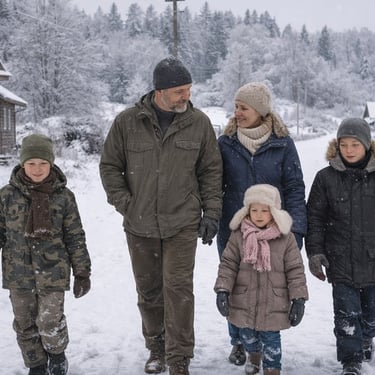
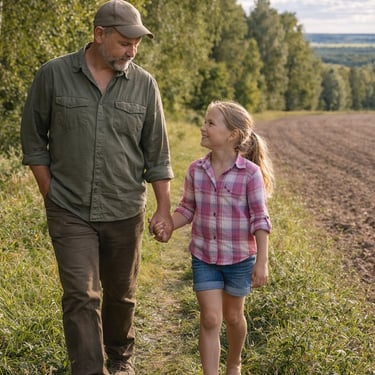
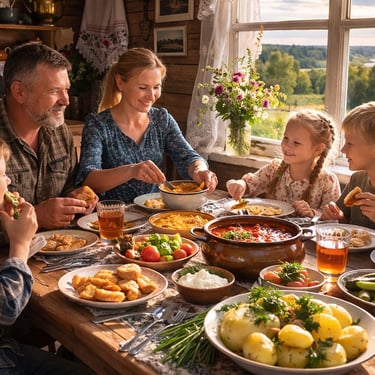
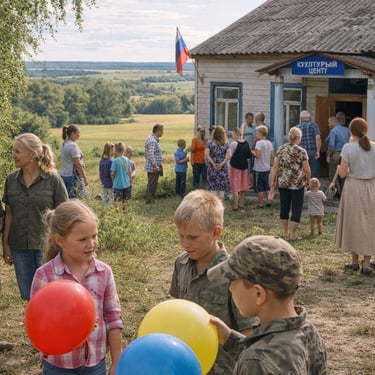
RUSSIAKANERS ALIGNMENT IN
NIZHNY NOVGOROD
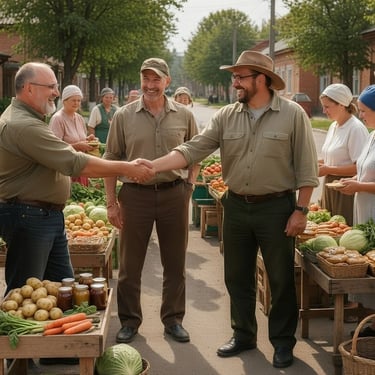
Nizhny Novgorod Oblast represents a structurally integrated agricultural region within central Russia.
Within the Russiakaners framework, alignment in this oblast is informational and evaluative, not operational.
Russiakaners:
Publishes factual regional overviews
Identifies structural agricultural characteristics
Highlights legal and administrative realities
Encourages capability-based assessment
Maintains neutrality regarding outcomes
The initiative does not allocate land, secure approvals, negotiate leases, or guarantee participation in any regional programme
Nizhny Novgorod may be suitable for families prioritising:
Market connectivity
Diversified agricultural production
Structured municipal environments
Integration within established supply chains
However, all engagement with regional authorities, cooperatives, or agricultural institutions remains the responsibility of the individual family and must occur within Russian legal frameworks.
Russiakaners provides visibility, not entitlement.
Evaluation, not placement.
Information, not guarantees.
CLIMATE PROFILE
Climate Type
Humid continental with forest-steppe influence
SOIL COMPOSITION
Nizhny Novgorod lies within forest-steppe and mixed soil zones.
Dominant Soil Types
Gray forest soils
Sod-podzolic soils (particularly northern districts)
Southern districts with higher fertility chernozem pockets
Soil Characteristics
Moderate humus content
Higher acidity in podzolic zones
Responsive to fertilisation and liming
Suitable for structured crop rotation systems
Compared to southern steppe black soils, fertility can be strong but more management-intensive depending on district.
District-level variation is significant and requires site-specific evaluation.
CROP PRODUCTION
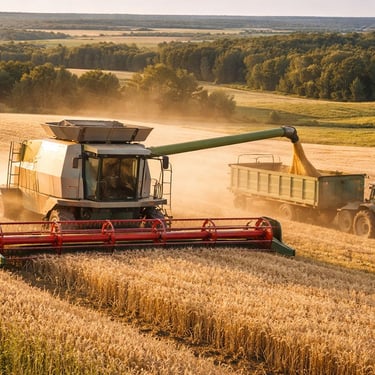
Agriculture in Nizhny Novgorod is diversified rather than monoculture grain.
Grain Crops
Winter wheat
Spring wheat
Barley
Rye
Industrial and Oilseed Crops
Rapeseed
Flax
Sugar beet (select districts)
Fodder Crops
Alfalfa
Clover
Silage maize
The presence of winter wheat is notable, supported by higher rainfall and forest-steppe conditions.
LIVESTOCK INTEGRATION
Nizhny Novgorod supports established livestock and dairy systems.
Common Livestock
Dairy cattle
Beef cattle
Poultry (regional scale)
The oblast has a stronger dairy orientation than many steppe regions. Mixed crop-livestock integration is common and often structurally linked to regional processing facilities.
This supports stable year-round agricultural income models rather than purely seasonal grain dependence.
YIELD OVERVIEW
Yields vary significantly by district and annual weather pattern. Approximate regional averages:
Wheat: 2.5 to 3.5 tonnes per hectare
Barley: 2.2 to 3.2 tonnes per hectare
Rapeseed: 1.8 to 2.5 tonnes per hectare
Higher rainfall generally supports stronger yields than dry steppe regions, though input costs and soil amendments may be higher.
Precise cooperative-level production figures are not publicly centralised and require direct regional sourcing for verification.
STRATEGIC AGRICULTURAL POSITIONING
NIZHNY NOVGOROD IS SUITED FOR:
Mixed crop and livestock operations
Dairy-focused farming systems
Diversified grain and oilseed production
Farmers prioritising logistics and processing proximity
Multi-generational settlement within structured rural municipalities
NIZHNY NOVGOROD IS NOT SUITED FOR:
Frontier-style large-scale steppe grain expansion
Extremely low-density isolated settlement models
Speculative land acquisition without operational intent
Hobby farming without commercial production focus
LONG TERM REGIONAL PROGRESSION
Nizhny Novgorod Oblast operates as a mature agricultural region rather than a frontier expansion corridor. Long-term progression within the oblast is typically tied to performance, integration, and operational stability.
Agricultural growth in this region generally follows structured pathways:
Demonstrated production consistency
Integration into regional supply chains
Cooperative or processor-aligned participation
Compliance with municipal and regional regulations
Incremental infrastructure investment
Expansion is more commonly achieved through:
Scaling existing operations
Strengthening dairy or livestock output
Increasing land under structured lease
Deepening cooperative integration
Unlike expansion-oriented steppe regions, growth here is system-based rather than land-availability driven.
Households that demonstrate long-term commitment, regulatory compliance, and economic viability may position themselves for broader participation within regional agricultural initiatives over time.
Progression is not entitlement based.
It is performance based and administratively regulated.
REGIONAL DEVELOPMENT FRAMEWORKS
Nizhny Novgorod Oblast participates in federal and regional agricultural development programmes focused on production modernisation, dairy sector strengthening, and rural employment stability.
These frameworks are structured within national agricultural policy and are administered through regional authorities.
Key characteristics include:
Alignment with federal agricultural legislation
Regional agricultural modernisation initiatives
Support for livestock and dairy production
Infrastructure and processing development
Cooperative participation mechanisms
These are production-oriented systems designed for capable operators. Entry into any structured programme remains subject to compliance with Russian legal and administrative requirements.
Russiakaners provides informational visibility into these frameworks. Final approval authority rests with regional institutions.
Note: Detailed public documentation outlining specific allocation thresholds, incentive amounts, or hectare figures is not comprehensively available in English-language sources. Direct regional confirmation is required for precise programme parameters.
LAND ACCESS STRUCTURES
Land access in Nizhny Novgorod operates within Russian agricultural land law and regional administration.
Mechanisms may include:
Long-term agricultural lease agreements
Purchase of existing agricultural operations
Cooperative-linked land use participation
Municipal-level agricultural allocations
Unlike steppe expansion regions, very large undeveloped contiguous parcels are less commonly characteristic of this oblast. Land availability and parcel size vary significantly by district.
Foreign participation typically relies on structured lease mechanisms under federal legislation. Acquisition structures must comply fully with Russian land law.
Important limitation:
There is no verified publicly available documentation confirming standardized hectare allocations per family within this region. Any such structure would require formal regional confirmation before being referenced as policy.
Land access is not automatic.
It is structured, regulated, and capability dependent.
PERFORMANCE GROWTH
Agricultural integration within Nizhny Novgorod is progressive rather than expansionist.
Families demonstrating:
Operational competence
Production consistency
Regulatory compliance
Integration into local supply chains
Long-term settlement intent
may position themselves for broader participation in regional agricultural initiatives over time.
Growth typically occurs through:
Increased production scale
Integration into dairy or processing networks
Infrastructure investment
Cooperative development participation
Eligibility for expanded participation is performance based and subject to regional administrative review.
This structure reinforces long-term agricultural sustainability rather than speculative relocation.
Russiakaners
A resource for farming families and cooperative agricultural settlement in Russia.
JOIN A NEW CONVERSATION
@Russiakaners Telegram Group
Quick Links
Information
© 2026 Общество с ограниченной ответственностью "АГЕНТСТВО ЮНИСТАРЗ". All rights reserved. E&OE Excepted.