
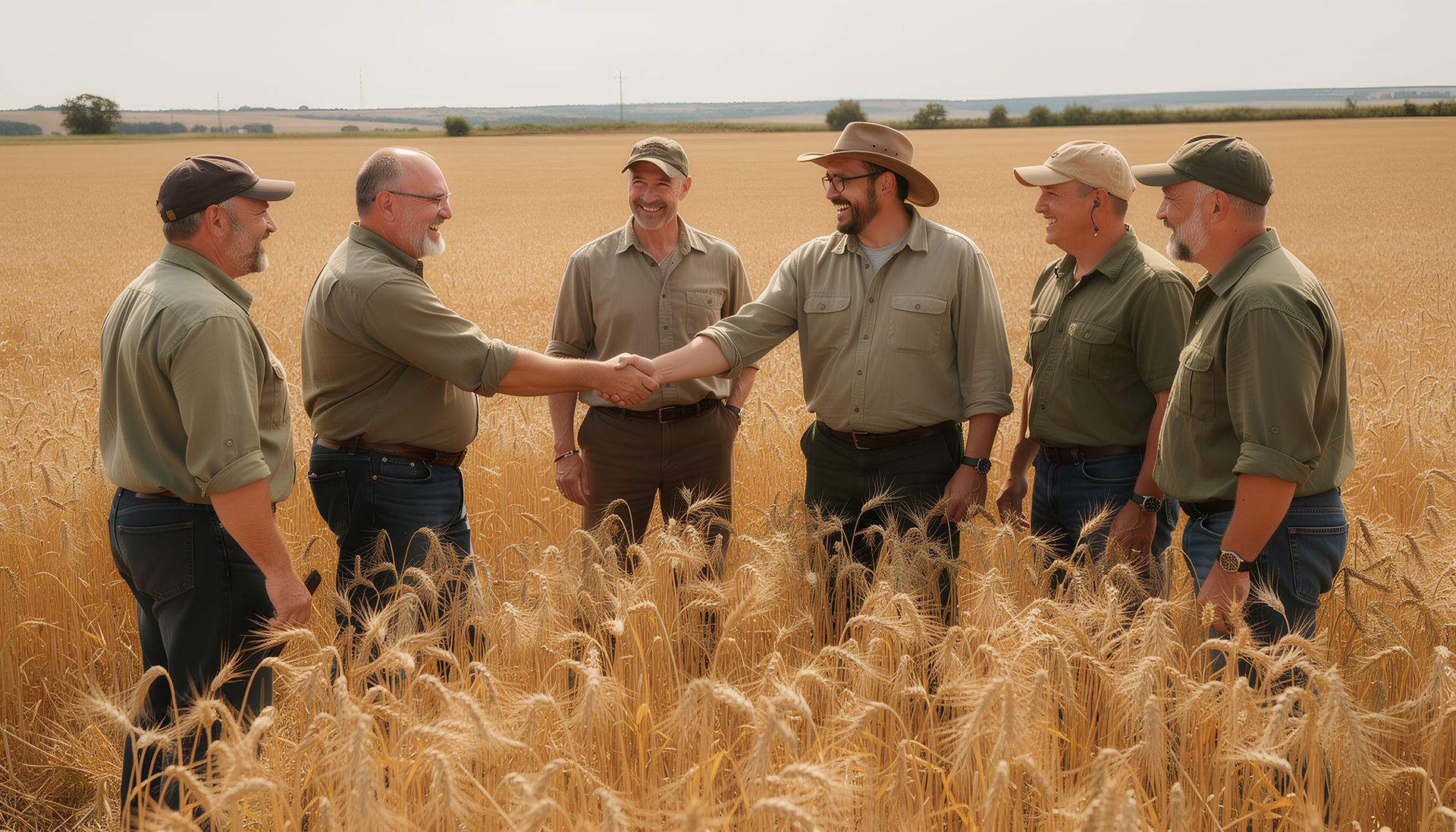
THE COOPERRATIVE SETTLEMENT MODEL
Russiakaners operates through regional agricultural cooperatives that together form a coordinated national cooperative network. This model provides the legal, operational, and governance foundation through which agricultural activity, land access, and long-term settlement are structured.
The cooperative model is central to ensuring lawful participation, shared responsibility, and sustainable regional integration.
A Cooperative-Based Agricultural Settlement Framework
WHY A COOPERATIVE MODEL IS USED
Agricultural settlement involves land use, production activity, regulatory compliance, and long-term community integration. These elements require a collective structure capable of managing shared responsibility, governance, and alignment with regional development priorities.
The cooperative model provides a lawful and recognised framework through which families can participate in agriculture while sharing infrastructure, governance obligations, and compliance requirements. It reduces individual exposure, distributes responsibility, and supports stability over time rather than isolated or speculative arrangements.
This model is embedded within Russian agricultural and regional development frameworks and is designed to support sustained participation rather than short-term relocation.
HOW COOPERATIVES ARE FORMED
Families who successfully progress through intake and eligibility stages join and constitute a regional agricultural cooperative together with other participating families and Russiakaners. Each cooperative is formed within a specific region and operates under applicable law, regional requirements, and defined governance rules.
The cooperative serves as the primary legal and operational vehicle through which agricultural activity, land access, and local integration are organised. Russiakaners participates within the cooperative structure to support coordination, alignment, and continuity, without replacing cooperative governance or regional authority.
PARTICIPATION AND GOVERNANCE
Participation in a cooperative involves shared governance, collective responsibility, and adherence to cooperative rules and obligations. Although families participate not as isolated operators, they also form part of the members of a structured entity responsible for agricultural activity, compliance, and engagement with regional programs.
This governance structure supports transparency, accountability, and long-term viability. It ensures that settlement activity is organised, lawful, and aligned with both cooperative and regional priorities.
LAND ACCESS AND PROGRESSION
Through cooperative participation, families may access agricultural land-use mechanisms defined by participating regional programs. Initial access is typically structured around lawful land-use arrangements that allow agricultural activity to commence while regulatory and cooperative requirements are met.
Over time, cooperative participation can support progression toward land ownership where applicable. Ownership progression is dependent on compliance, participation, and satisfaction of regional and legal criteria. Russiakaners does not allocate land or guarantee ownership outcomes, but coordinates pathways that operate within recognised frameworks.
A NATIONAL COOPERATIVE NETWORK
Regional cooperatives operate as part of a coordinated national network supported by Russiakaners. This structure provides consistency across regions, shared standards, and continuity for families as they progress through settlement pathways.
The national Russiakaners network functions as a stabilising framework rather than a centralised authority, supporting cooperative sustainability and regional integration while respecting local governance and conditions.
THE ROLE OF RUSSIAKANERS WITHIN THE MODEL
Within the cooperative settlement model, Russiakaners maintains intake discipline, process sequencing, and coordination across cooperatives, regions, and aligned partners. Its role is to support structure, alignment, and continuity without assuming execution authority or replacing cooperative or regional decision-making.
This separation of responsibility preserves accountability and protects all participants.
WHY THIS MODEL MATTERS
The cooperative settlement model reduces risk, distributes responsibility, and supports long-term agricultural viability. It provides families with a structured environment in which settlement decisions can be made responsibly and progressively.
This model prioritises stability, legitimacy, and continuity over speed.
Russiakaners
A resource for farming families and cooperative agricultural settlement in Russia.
JOIN A NEW CONVERSATION
@Russiakaners Telegram Group
Quick Links
Information
© 2026 Общество с ограниченной ответственностью "АГЕНТСТВО ЮНИСТАРЗ". All rights reserved. E&OE Excepted.